
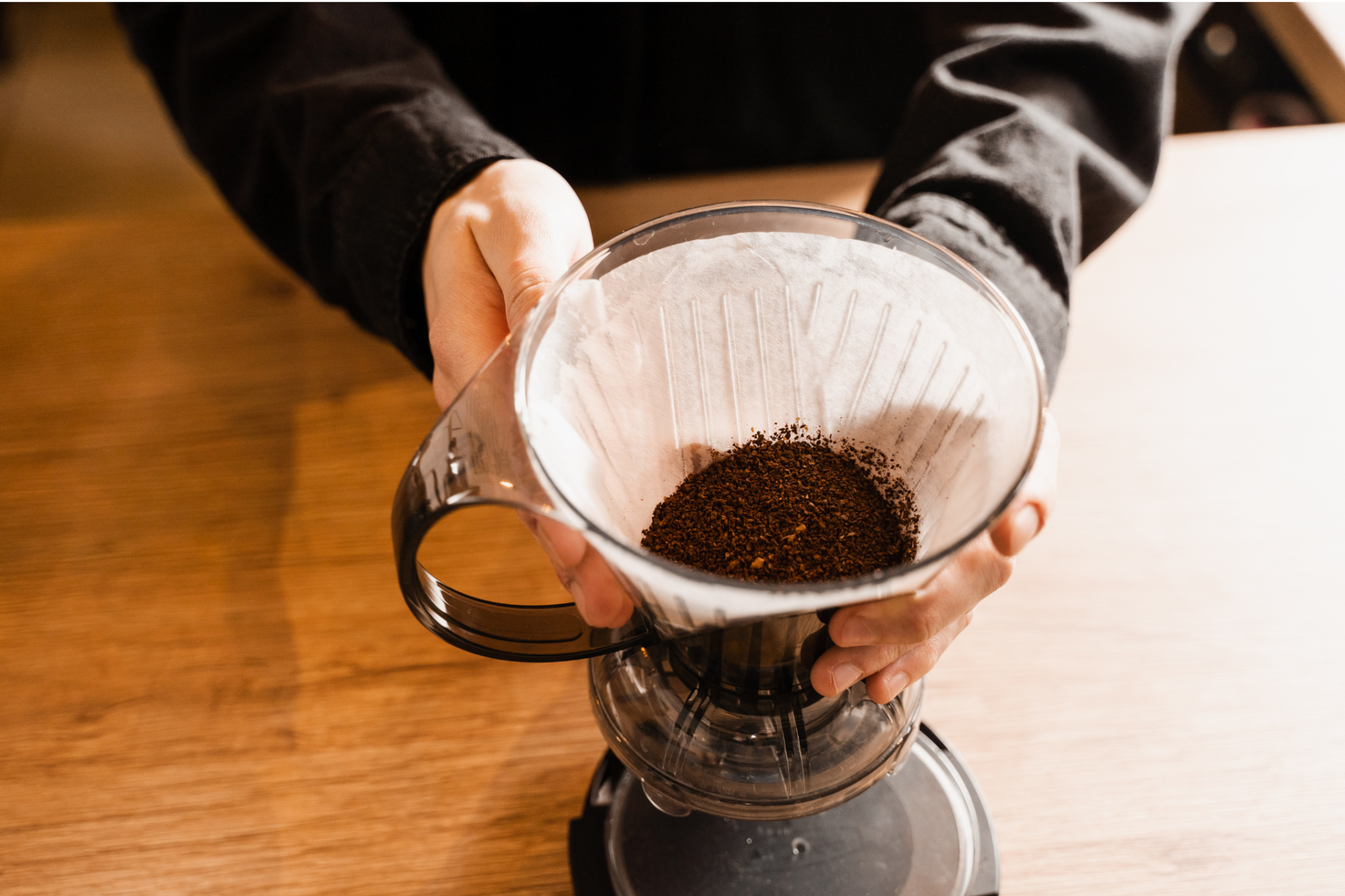
Pour-over brewing rewards control. A small change in grind size, water flow, or pouring technique can shift the cup from sweet and clean to bitter, sour, or muddy. That is why specialty coffee grinding for pour-over starts with choosing a grinder that can produce consistent particles, support small adjustments, and fit the way you actually brew.
A good pour-over grinder does more than break coffee beans into smaller pieces. It shapes how water moves through the coffee bed, how evenly the coffee extracts, and how repeatable your cup tastes from one brew to the next.
If the grinder produces too many fines, the brew can stall and taste harsh. If it produces too many large particles, the cup can taste weak or underdeveloped. A suitable grinder sits between those extremes and gives you enough control to adjust based on coffee, brewer, and recipe.
Why Pour-Over Needs a Different Grinder Mindset
Espresso grinders are often judged by how finely and precisely they can grind for pressure-based brewing. French press grinders are judged by how well they handle coarser grinds. Pour-over sits in the middle, but it is not casual.
Pour-over needs a grinder that can produce a clean, consistent medium to medium-fine grind. More importantly, it needs a grinder that can avoid excessive fines because fines have a major impact on flow.
A pour-over brew depends on water passing through the coffee bed at a controlled pace. If the grind is inconsistent, water does not extract evenly. Some particles give up too much. Others do not give up enough.
That is why pour-over can expose grinder limitations quickly.
The Core Job of a Pour-Over Grinder
A pour-over grinder should help you control extraction.
That means it should support:
- Consistent particle size
- Predictable drawdown
- Clear flavor separation
- Small adjustment changes
- Low static
- Low retention
- Easy cleaning
- Repeatable settings
- Comfortable daily workflow
The best grinder is not always the most expensive one. It is the one that helps you brew the kind of coffee you enjoy without forcing you to fight inconsistency every morning.
Burr Quality Matters More Than Looks
The burrs are the most important part of the grinder. They determine how coffee breaks apart and how consistent the final grind will be.
Blade grinders chop beans unevenly. They can create powder-like fines and large fragments in the same batch. That makes balanced pour-over brewing difficult.
Burr grinders crush coffee between two burr surfaces, which produces a more controlled grind. For pour-over, this difference is significant.
A suitable burr grinder should produce a grind that looks even, feels consistent, and behaves predictably during brewing.
Flat Burrs vs Conical Burrs for Pour-over
Both flat and conical burrs can work for pour-over. The choice depends on preference and grinder quality.
Flat burrs are often valued for clarity. They can produce a more uniform particle distribution, which can help highlight delicate flavor notes in lighter roasts.
Conical burrs are often more forgiving. They can still produce excellent pour-over results and may create a cup with more body depending on the grinder design.
Quick Comparison
| Burr Type | Common Strength | Best For |
| Flat burrs | Clarity and uniformity | Brewers who want defined flavor notes |
| Conical burrs | Forgiveness and body | Brewers who want balance and ease |
| Blade grinders | Low cost only | Not ideal for serious pour-over |
The burr type matters, but build quality, alignment, and adjustment design matter just as much.
Grind Uniformity Is the Real Test
A grinder suitable for pour-over should produce a narrow enough particle range for balanced extraction. No grinder creates perfectly identical particles, but better grinders control the spread more effectively.
Uneven grind distribution causes two problems at once:
- Fines extract too quickly and can add bitterness.
- Large particles extract too slowly and can add sourness or weakness.
This is why a cup can taste both bitter and underdeveloped. The issue is not always the recipe. It may be the grind.
A uniform grind helps water pass through the bed more evenly. That supports sweetness, clarity, and a cleaner finish.
Adjustment Precision Helps You Dial In
Pour-over brewing often requires small grind changes. Different beans, roast levels, brewers, filters, and recipes all behave differently.
If your grinder has large adjustment jumps, dialing in becomes frustrating. One setting may drain too quickly. The next may stall the brew.
A good pour-over grinder should let you make small, controlled changes.
This is useful when adjusting for:
- Light roast coffees
- Dense beans
- Different filter papers
- V60 vs Kalita vs Chemex
- Larger or smaller brew batches
- Different pour styles
- Seasonal coffee changes
The more precise the adjustment, the easier it is to find the cup you want.
Different Brewers Need Different Grind Ranges
A grinder suitable for pour-over should work across common manual brewing methods. Not every brewer uses the same grind size.
A V60 often works well with a medium-fine grind because it has fast flow and a cone shape.
A Chemex usually needs a slightly coarser grind because the filter is thicker and the brew volume is often larger.
A Kalita Wave often sits in the medium range because its flat-bottom design creates a more controlled flow.
Common Starting Points
| Brewer | Typical Grind Range | Why |
| V60 | Medium-fine | Faster flow needs enough extraction |
| Kalita Wave | Medium | Flat-bottom supports steadier extraction |
| Chemex | Medium-coarse | A thicker filter slows the brew |
| Origami | Medium to medium-fine | Depends on filter type and recipe |
| Fellow Stagg | Medium | Controlled drainage and stable bed |
These are starting points, not fixed rules. Taste should always guide the final adjustment.
Low Fines Production Is Important
Fines are small coffee particles that can slow water flow. Some fines are unavoidable, but too many create problems.
Too many fines can cause:
- Stalled drawdown
- Bitter flavors
- Dry finish
- Muddy cup texture
- Reduced clarity
- Less repeatability
A suitable pour-over grinder should limit fines enough for the brew to drain predictably. This is especially important with paper filters, where fines can settle at the bottom and restrict flow.
If your brews often slow down near the end or taste harsh despite a reasonable recipe, your grinder may be producing too many fines.
Retention Affects Freshness and Accuracy
Retention is the coffee that stays inside the grinder after grinding. For pour-over, low retention matters because stale grounds can mix with the next brew.
Retention also affects dose accuracy. If you weigh in 20 grams but get noticeably less out, your recipe is not what you planned.
A low-retention grinder helps with:
- Freshness
- Dose accuracy
- Cleaner flavor
- Easier coffee switching
- Better repeatability
- Less waste
This is especially important if you switch between coffees often or brew one cup at a time.
Static Control Makes Workflow Cleaner
Static can make grounds cling to the grinder chute, catch cup, or counter. It may seem like a small issue, but it can make daily brewing messy and inconsistent.
Static affects:
- Cleanliness
- Dose transfer
- Grind retention
- Counter workflow
- Brewing consistency
A good pour-over grinder should manage static reasonably well. Some grinders do this through design. Some users reduce static by lightly misting beans before grinding.
The goal is simple: get the ground coffee into the brewer cleanly and consistently.
Manual Grinders Can Be Excellent for pour-over
Manual grinders are often a strong choice for pour-over because they can offer good burr quality at a lower price than many electric grinders.
They are especially useful for:
- Single-cup brewers
- Travel setups
- Quiet morning routines
- Small kitchens
- Budget-conscious specialty coffee drinkers
- People who enjoy the brewing ritual
The trade-off is effort and speed. If you brew multiple cups daily or prepare coffee for several people, hand grinding can become tiring.
Electric Grinders Fit Daily and Higher-Volume Use
Electric grinders are better for people who brew often, brew larger batches, or want a faster workflow.
They are useful when:
- You brew every morning.
- You make coffee for more than one person.
- You switch between brew methods.
- You want faster grinding.
- You prefer less physical effort.
- You need a repeatable daily routine.
A good electric grinder should still offer the same core qualities: uniformity, precise adjustment, low retention, and easy cleaning.
Build Quality and Stability Matter
A grinder can look good on the counter and still perform poorly. Build quality affects long-term consistency.
A suitable pour-over grinder should feel stable, not flimsy. Its adjustment mechanism should hold position. Its burrs should stay aligned. Its motor, if electric, should run smoothly and not overheat during normal use.
Important build factors include:
- Burr alignment
- Body stability
- Adjustment stability
- Motor reliability
- Easy burr access
- Clean chute design
- Quality materials
- Serviceability
For daily brewing, durability matters because small mechanical issues can affect consistency over time.
Cleaning Should Be Simple
Coffee oils and tiny particles build up inside grinders. If the grinder is hard to clean, users often delay maintenance. That can affect flavor and performance.
A good pour-over grinder should be reasonably easy to clean.
Regular cleaning helps:
- Remove stale grounds
- Reduce old coffee oil buildup
- Improve flavor clarity
- Maintain grind consistency
- Reduce retention
- Extend grinder life
If your coffee starts tasting stale or muddy, cleaning the grinder should be one of the first steps.
How to Know a Grinder Is Working Well for pour-over
A suitable grinder makes brewing easier to repeat.
Signs of good grinder performance include:
- Brew times are predictable.
- Cups taste clean and balanced.
- Small grind adjustments create clear changes.
- Coffee does not taste muddy.
- Drawdown does not stall unexpectedly.
- Different coffees are easier to dial in.
- Recipes can be repeated with similar results.
- The workflow feels clean and manageable.
A good grinder does not make every coffee perfect automatically, but it gives you a stable foundation.
Signs Your Grinder Is Holding You Back
A grinder may be limiting your pour-over quality if you notice:
- The same recipe tastes different each day.
- Drawdown times vary widely.
- Cups often taste bitter and sour together.
- The brew stalls near the end.
- The cup lacks clarity.
- You see many powdery fines.
- Grind adjustment feels too coarse or jumpy.
- Switching coffees feels unpredictable.
- Cleaning does not improve performance.
When these issues keep happening, changing filters or recipes may not fully solve the problem. The grinder may be the weak link.
Matching the Grinder to Your Brewing Style
The best pour-over grinder depends on how you brew.
For occasional single-cup brewing, a high-quality manual grinder may be enough.
For daily brewing, an electric grinder with strong adjustment control may be more practical.
For multiple brew methods, choose a grinder with a wide and repeatable range.
For light roasts, prioritize uniformity and precision.
For small kitchens, consider footprint and noise.
For frequent coffee switching, choose low retention.
The right grinder should fit your routine, not force you into a workflow you dislike.
What Coffee Buyers Should Prioritize
When shopping for a pour-over grinder, focus on practical performance.
Look for:
- Burr grinder design
- Consistent medium grind range
- Low fines production
- Precise adjustment
- Low retention
- Easy cleaning
- Stable construction
- Comfortable workflow
- Good performance with your preferred brewer
- Long-term reliability
Ignore features that do not affect your actual brewing routine. A grinder can have an impressive spec sheet but still be a poor fit for how you make coffee.
Conclusion
A coffee grinder is suitable for pour-over brewing when it gives you control over extraction. That means consistent particles, precise adjustment, low fines, low retention, and a workflow that supports repeatable brewing.
pour-over exposes grinder weaknesses quickly because water flows through the coffee bed in real time. If the grind is uneven, the cup will show it through bitterness, sourness, muddiness, or inconsistent drawdown.
The right grinder helps you brew cleaner, sweeter, and more repeatable cups. It does not replace technique, but it gives your technique a better foundation. For anyone serious about pour-over, grinder quality is one of the most important upgrades you can make.
